Executive White-Paper & Procurement Analysis
Engineering Metallurgy & Manufacturing Benchmarks in China's Hex Wrench Industry
Why high-precision hand tool manufacturing requires rigorous metallurgical selection, cold forging control, and modern chamfer geometry to eliminate fastener stripping in premium assembly environments.
In global hardware procurement, hex wrenches (commonly designated as Allen keys or socket head keys) serve as critical fasteners across aerospace engineering, automotive maintenance, automated industrial machinery, and precision bicycle assembly. As carbon-fiber structures, ultra-light aluminium alloys, and high-tensile titanium bolts become standard in high-performance sectors, the engineering demands placed on hex wrench suppliers have shifted dramatically. A sub-standard hex wrench with minor dimensional variance or inadequate torsional resistance risks stripping fastener sockets, causing thousands of dollars in component damage and assembly line downtime.
China has evolved into the world's premier center for advanced hand tool manufacturing, transitioning from high-volume production to high-precision engineering. Leading Chinese exporters utilize state-of-the-art cold forging equipment, computer-controlled heat treatment furnaces, and CNC bit grinding technologies. By incorporating structural innovations pioneered by world-renowned tool designers—such as Prestacycle’s modular bit ecosystems, auto-locking inflation mechanisms, and calibration-free torque springs—top-tier suppliers deliver products that meet and exceed ISO 2936, DIN 911, and ASME B18.3 standards.
S2 Tool Steel Metallurgy
Utilizing Silicon-Manganese (S2) modified steel alloyed with Vanadium and Molybdenum. Achieves HRC 58-62 hardness while maintaining structural ductility to prevent brittle catastrophic snaps under extreme yield torque.
CNC Chamfered Tips
Precision computer-controlled machining guarantees clean 25° ball-end chamfering and crisp 90° flat hex edges. Ensures instant engagement and zero rotational slop inside fasteners.
Corrosion Resistance
Multi-stage electro-plating including industrial manganese phosphate, satin nickel chrome, and black titanium physical vapor deposition (PVD) exceeding 96-hour salt-spray standards.
Technological Synergy: Integrating Professional Precision into Hex Tool Manufacturing
The benchmark of a premier OEM/ODM supplier lies in its capacity to translate high-end professional feedback into repeatable mass manufacturing. For nearly two decades, professional cycling tool design—exemplified by USA-engineered Prestacycle tools—has led the industry in solving torque over-tightening and rounded bolt heads on delicate carbon bicycle components.
When professional mechanics at Grand Tours such as the Vuelta a España or Giro d’Italia service team bikes under extreme pressure, tool failure is not an option. Mechanics supporting teams like INEOS Grenadiers and Tudor Pro Cycling rely on specialized 1/4" hex tool systems, drop-resistant pre-set T-handle torque keys, and ultra-durable mini ratchets. By adapting these exact engineering principles, leading Chinese manufacturing facilities have modernized their export product lines:
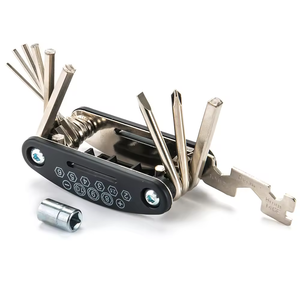
- Universal 1/4-Inch Hex Architecture: Standardizing workshop T-handles, Y-wrenches, and portable multi-tools around a single, interchangeable 1/4" hex bit interface. This reduces tool count while increasing field functionality.
- Calibration-Free Internal Torque Springs: Utilizing pre-calibrated industrial internal springs manufactured to microscopic tolerances. Unlike traditional click-style torque wrenches that lose accuracy when dropped or stored under tension, pre-set torque keys maintain zero-recalibration integrity over tens of thousands of cycles.
- Auto-Locking Anti-Twist Geometries: Applying auto-locking, non-slip engagements to hex bits and socket drivers to ensure full contact depth before rotational force is applied.
- Serviceable Tool Ecosystems: Designing tools with replaceable driver tips and rebuildable ratchet assemblies, extending the total service lifecycle and reducing long-term enterprise tool costs.
Future B2B Procurement Trends: The Next Decade of Hex Tool Innovation
As global B2B buyers navigate supply chain shifts, sustainability mandates, and evolving industrial standards, the hex wrench procurement landscape is undergoing significant transformation. Procurement officers are looking beyond unit price to evaluate Total Cost of Ownership (TCO), supplier manufacturing agility, and structural innovation.
1. Modular Tooling Ecosystems
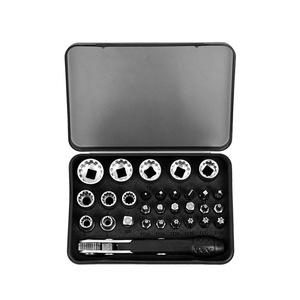
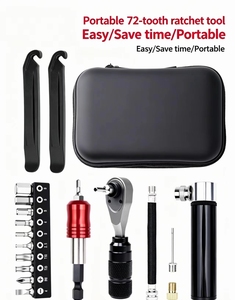
Rather than shipping bulky, redundant L-wrench sets, modern enterprise buyers are adopting modular driver systems. A single ergonomic ratchet or T-handle combined with magnetic 1/4" S2 hex, Torx (T10, T15, T25, T30), and screwdriver bits cuts shipping volume by up to 60% while expanding tool utility across complex assembly environments.
2. Integrated Torque Limiting
With lightweight composite materials expanding from high-end cycling into electric vehicles, consumer electronics, and drone frames, over-torquing has become a primary failure point. The future of hex tools belongs to mini torque-limiting keys (4Nm, 5Nm, 6Nm pre-sets) that click out once maximum safe torque is reached, preventing expensive component fractures.
3. Sustainable Eco-Coatings
Global environmental regulations (such as EU REACH and RoHS directive compliance) are driving suppliers away from traditional hexavalent chromium plating. China’s premier exporters lead the transition toward green electro-polishing, manganese black phosphate, and eco-friendly organic powder coats that maintain rust resistance without toxic heavy-metal effluents.
Quality Assurance Protocols: Ensuring Zero-Defect OEM Export Batches
Top Chinese hex wrench suppliers enforce multi-tier quality control pipelines to guarantee consistent performance across multi-thousand-unit production runs. When selecting an export partner, global buyers should verify adherence to four essential testing benchmarks:
- Dimensional Precision & Chamfer Geometry: Digital optical comparator inspection ensures hex width across flats (AF) strictly adheres to ISO tolerances (e.g., +0.00 / -0.04 mm on 4mm keys) to prevent socket wobble.
- Rockwell Hardness (HRC) Testing: Destructive cross-sectional micro-hardness testing verifies uniform heat treatment depth from the core to the surface skin, eliminating soft cores or brittle skins.
- Torsional Fracture & Destruction Resistance: Applying static torque until structural deformation occurs, validating that the wrench flexes elastically before breaking, protecting the operator's hands from abrupt shear failure.
- Environmental Corrosion Testing: Continuous neutral salt spray chamber exposure (ASTM B117) to verify zero red rust formation after 96 hours, guaranteeing long shelf-life during trans-oceanic shipping.
Why Partner with China’s Leading Hex Wrench Exporter?
Partnering with a specialized Chinese supplier offers direct factory pricing, engineering depth, and scalable production capacity tailored to global hardware brands, OEM equipment manufacturers, and wholesale distributors:
Direct Metallurgical Sourcing
Long-term strategic contracts with top steel foundries ensure certified alloy purity, consistent heat treat response, and stable material costs despite global market fluctuations.
Automated Multi-Axis CNC Machining
Automated Swiss-type CNC lathes and cold-forging presses deliver micron-level tolerance consistency across millions of units annually, backing your brand with zero-defect reliability.