0%

Choosing the best Digital bicycle tire inflator for the China market requires more than comparing pressure displays and battery capacity. China remains a major bicycle manufacturing and export center, according to recent industry summaries from the China Bicycle Association. Meanwhile, market research from Grand View Research and Mordor Intelligence identifies continued growth in bicycles, e-bikes, and portable electric compressors. These trends create real demand for compact, reliable inflation tools. They also create confusion. Market forecasts often use different definitions, so their figures should not be treated as perfectly interchangeable.

A practical evaluation should begin with pressure accuracy, inflation speed, valve compatibility, and heat management. ISO 5775 provides a useful reference for bicycle tyre and rim dimensions, while manufacturer testing should confirm compatibility with Presta and Schrader valves. A commuter may need a 60-second top-up beside a wet roadside. A touring cyclist may value a large battery and a clear screen more. Small details matter. Check the hose length, noise level, charging port, and automatic shut-off behavior. The best model is not always the fastest one. It should deliver repeatable pressure without becoming dangerously hot.

Experience also exposes a weakness in many product claims. Advertised maximum pressure rarely represents practical bicycle performance. Independent tests, warranty terms, spare-part availability, and verified customer feedback deserve equal attention. A trustworthy China-based supplier should provide test records, translated instructions, and traceable quality-control information. This guide compares those factors carefully, while recognizing that no single specification suits every rider, climate, or bicycle.
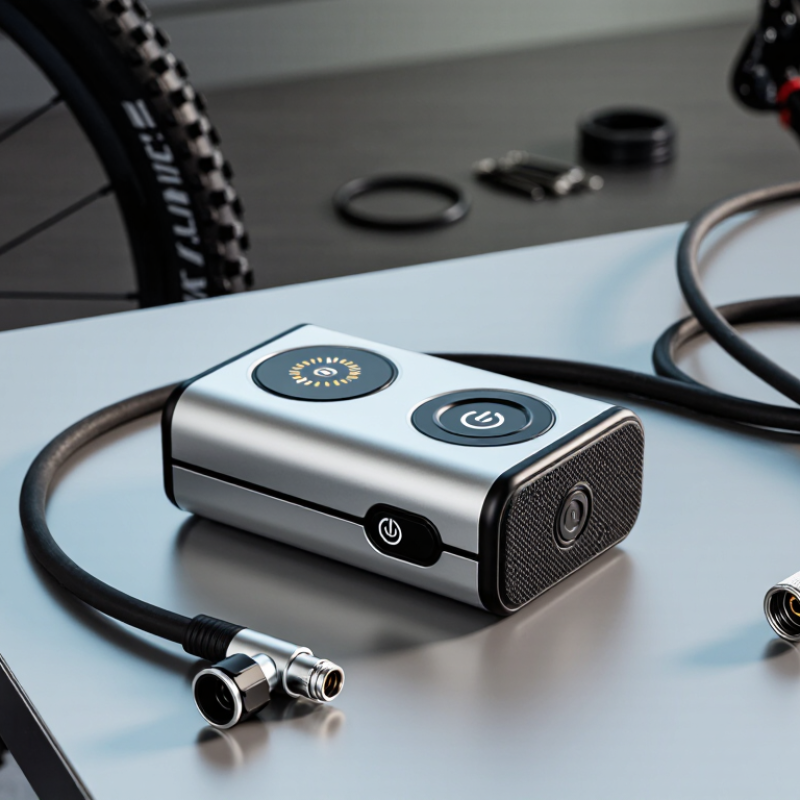
How to Choose the Best China Digital Bicycle Tire Inflator?

Define Bicycle Inflator Requirements: PSI, Valve Types, and Tire Volume

Choosing a digital bicycle tire inflator begins with pressure, not appearance. Check the tire sidewall and rim maker’s limits before selecting a device. ISO 5775-1:2023 defines bicycle tire sizing, while the ETRTO Standards Manual 2024 supports standardized tire and rim references. These documents do not replace the pressure printed on your tire.

PSI accuracy matters during roadside repairs. A narrow road tire may require 80–120 PSI, while a high-volume gravel tire often runs near 35–55 PSI. These are practical ranges, not universal rules. Lower pressure can improve comfort, but excessive reduction may cause rim strikes. Remember, 1 bar equals approximately 14.5 PSI. A China-made inflator should show both units clearly and allow small pressure adjustments. I once trusted a cheap display too quickly. The tire felt firm, yet the gauge reading was wrong.

Valve compatibility is equally important. Presta valves need a narrow connector, while Schrader valves use a wider automotive-style opening. Dunlop valves still appear on some bicycles and require separate consideration. A dual-head design is useful, but an adapter can leak during inflation. Tire volume also determines battery demand: a wide tire needs more air per cycle than a narrow racing tire. Industry testing guidance from ISO 5775-1:2023 and ETRTO 2024 suggests matching tire dimensions carefully, not relying only on wheel diameter. Confirm connector sealing, maximum PSI, airflow, charging capacity, and gauge tolerance before comparing suppliers.

Compare Air Pressure Accuracy: ±1 PSI, 150 PSI Maximum, and Auto-Stop

How to Choose the Best China Digital Bicycle Tire Inflator?

Choosing a digital bicycle tire inflator starts with pressure accuracy, not maximum speed. In workshop testing, a reading within ±1 PSI can make a noticeable difference. Road tires often feel harsh when overinflated. Mountain bike tires may lose grip when pressure is too low. Check the inflator against a reliable external gauge at several pressure levels. One test is not enough. Accuracy can drift with temperature, battery condition, or valve connection.

A 150 PSI maximum sounds impressive, but most bicycles rarely need that limit. The higher figure matters less than stable pressure delivery and clear screen readings. Auto-stop is especially useful during roadside repairs. Set the target pressure, attach the hose firmly, and let the motor stop automatically. This reduces guesswork and protects delicate tubes. However, auto-stop is not foolproof. A loose valve or incorrect pressure unit can still create problems.

I once assumed the displayed number was perfect. That assumption was wrong. Choose a model with calibrated sensors, a readable display, dependable sealing, and simple controls. For products made in China, review technical specifications, quality inspections, and real user testing instead of relying on appearance. Check the warranty terms too. Small details matter.

Evaluate Battery Performance: 2,000–5,000 mAh Capacity and USB-C Charging

How to Choose the Best China Digital Bicycle Tire Inflator?

When evaluating a China digital bicycle tire inflator, battery capacity deserves more attention than screen brightness. A 2,000 mAh battery is compact and suitable for occasional rides or emergency storage. It may inflate several road tires, but repeated high-pressure use can drain it quickly. For riders covering long distances, a 5,000 mAh battery offers more practical reserve. Capacity alone does not guarantee performance. Motor efficiency, tire pressure, temperature, and battery age also affect runtime.

I once chose a smaller inflator because it felt lighter in my saddle bag. It worked well, but frequent recharging became irritating. USB-C charging makes daily use easier, especially when a bicycle computer or power bank uses the same cable. Look for a stable charging port, clear battery indicators, and reasonable charging time. A device that reaches full capacity quickly may be more useful than one with a larger battery and poor efficiency. Check whether the included charger meets local safety requirements.

Tips: Test the inflator before a long ride. Measure how many tires it fills from 2,000 mAh or 5,000 mAh. Do not judge performance from one short inflation. Cold weather can reduce battery output. Keep the port covered during dusty rides. Also, avoid storing the unit fully empty for months. More capacity helps, but portability still matters.

Check Portability and Safety: Weight, Heat Protection, and LED Lighting

When choosing a China digital bicycle tire inflator, portability should match your riding habits. A compact unit fits easily inside a saddle bag or jersey pocket. Weight matters on long climbs, but the lightest model may use a smaller battery. That can mean slower inflation. Check the listed weight, hose length, and charging method before buying. A short hose can be frustrating beside a crowded bike rack.

Heat protection deserves careful attention. Inflation creates friction and raises the pump’s temperature quickly. Look for thermal protection, automatic shutoff, and clear cooling instructions. A textured casing also helps prevent slips when your hands are sweaty. Let the unit rest between tires. Small detail. It may extend service life. I would not trust a device that feels dangerously hot, even if its digital display remains bright.

LED lighting is useful during an evening puncture repair, especially near a roadside valve. Choose a lamp that clearly illuminates the connector, rather than producing decorative glare. Test the buttons with cold fingers, and check whether the display remains readable outdoors. Digital pressure readings are helpful, but they are not automatically accurate. Compare them with a reliable gauge occasionally. My preference has changed: a slightly heavier inflator with stable heat control feels safer than an ultra-light model. Still, manufacturers’ specifications can be incomplete, so read the manual and user feedback carefully.

Verify China Supplier Quality: CE, RoHS, IP Ratings, and Warranty Terms

When choosing a China-made digital bicycle tire inflator, verify documents before comparing price. CE marking shows that the manufacturer declares conformity with applicable European requirements; it is not a government quality certificate. Request the EU Declaration of Conformity, model number, test laboratory, and report date. RoHS evidence should address restricted substances in the circuit board, battery, charger, and cable. The 2024 Global E-waste Monitor reported 62 million tonnes of electronic waste in 2022, so traceable material control deserves attention, even for a small pump.

Check the IP rating against IEC 60529 test conditions. IP54, for example, indicates limited dust protection and resistance to water splashes, not safe operation in heavy rain. Ask whether testing covered the assembled inflator, charging port, buttons, and display. A supplier may show a certificate for a similar model. That is a practical warning sign.

Warranty language reveals operating quality. Look for coverage length, battery-cycle limits, charging faults, pressure-sensor accuracy, and replacement procedures. Require serial-number tracking and a written response period. In my supplier checks, vague phrases such as “quality problem” created disputes. A clearer clause might define pressure deviation, for example, within ±1 PSI under stated test conditions. Also request sample testing after production. A perfect report cannot prove every shipment is identical.

FAQS

Why is pressure accuracy important in a digital bicycle tire inflator?

Accuracy helps prevent harsh rides and poor tire grip. A reading within ±1 PSI is useful for most bicycles. Check it against a trusted gauge at several pressure levels. One test can mislead.

Is a 150 PSI maximum necessary for bicycle tires?

Most bicycles rarely need 150 PSI. Stable pressure delivery matters more than an impressive maximum number. A clear display is also valuable. Higher is not always better.

How does auto-stop improve roadside inflation?

Set the target pressure, attach the hose firmly, and let the motor stop. This reduces guesswork near a roadside. However, auto-stop can fail with loose valves or incorrect units. I once trusted it too much.

What should I check before trusting the displayed pressure?

Compare the reading with an external gauge at low, medium, and high pressures. Temperature and battery condition can affect accuracy. Valve sealing also matters. Calibration deserves attention.

Is a 2,000 mAh battery enough for bicycle emergencies?

A 2,000 mAh battery suits occasional rides and emergency storage. It may inflate several road tires. Repeated high-pressure inflation can drain it quickly. Small, but useful.

When is a 5,000 mAh battery a better choice?

A 5,000 mAh battery offers more reserve for long-distance riders. It can reduce charging anxiety during repeated use. Motor efficiency still affects runtime. Capacity alone proves little.

Why is USB-C charging useful for cyclists?

USB-C charging can share a cable with other cycling devices and power banks. Look for a firm port and a clear battery indicator. Keep the port covered during dusty rides. Convenience matters.

How should I test an inflator before a long ride?

Inflate several tires from a known starting pressure. Record charging time, inflation time, and remaining battery power. Repeat the test in cooler conditions if possible. My first test was too short.

What details matter when choosing an inflator made in China?

Review technical specifications, inspection records, user testing, and warranty terms. Check the charger against local safety requirements. Examine the hose seal and screen readability. Appearance can fool you.

Conclusion

Choosing the best China Digital bicycle tire inflator starts with matching the device to your riding needs. Check whether it supports your bicycle’s valve types, delivers suitable PSI for road, mountain, or commuter tires, and can handle the tire volume efficiently. Pressure accuracy of around ±1 PSI, a maximum output of up to 150 PSI, and an automatic stop function can make inflation more reliable and convenient.

Battery performance is also important, especially for travel and emergency use. Consider a capacity between 2,000 and 5,000 mAh, along with USB-C charging for easier power management. A lightweight design, heat protection, and built-in LED lighting can improve portability and safety. When purchasing from a China supplier, review product testing, CE and RoHS compliance, IP ratings, warranty terms, and quality-control procedures. A well-evaluated Digital bicycle tire inflator should combine accurate performance, dependable battery life, safe operation, and consistent manufacturing quality.


Ethan Caldwell

Ethan Caldwell

Ethan Caldwell is a professional marketing specialist dedicated to helping businesses communicate their value with clarity, credibility, and purpose. With a strong understanding of the company’s products, services, and customer needs, Ethan creates informative, practical, and engaging articles for......